
Exploratory Surgery in Dogs and Cats
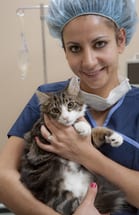 When it is impossible to definitively diagnose or treat disease conditions in our animals by less invasive methods, exploratory surgery may be necessary. Operations may be performed on pets who exhibit symptoms for which blood, urine, and diagnostic imaging tests, such as X-rays and ultrasound scans, fail to provide sufficient information. The advantage of exploratory surgery is that it not only provides the veterinarian with the opportunity to directly observe abnormalities, but, in many cases, with the opportunity to intervene immediately, possibly saving the animal's life.
Most often, exploratory surgery is performed on dogs and cats, but may be performed on any number of other animals, large and small, as well. In the vast majority of instances, the undiagnosed problem is in the gastrointestinal tract. During exploratory surgery, the doctor will be able to detect any structural abnormalities, ingested foreign bodies, twisted intestines or tumors and to extract tissue samples for biopsy. In many cases, it is possible to remove the offending growth or ingested object during the same procedure. Other reasons for exploratory surgery in the region include bloat and intussusception, a condition in which one part of the intestine collapses into another like a retracting telescope.
Reasons for Exploratory Surgery
If disturbing medical symptoms recur without explanation, exploratory surgery may be the only avenue available to remedy the situation. If X-rays (even those performed with barium), microscopic examinations and blood work do not detect pathogens or imbalances, exploratory surgery becomes necessary. In many cases, diagnostic tests lead to a suspicion of a particular problem, but the exploratory surgery is needed to confirm or rule out the suspected disorder.
Ongoing symptoms with unconfirmed causes may include.
- Acute or intermittent vomiting
- Diarrhea
- Weight loss
- Abdominal swelling
- Abdominal pain
- Abnormal gas (at times observed on X-ray)
While exploratory surgery is never undertaken lightly, it should be considered successful any time it leads to a clear diagnosis. Although the pet owner may find it more satisfying for the veterinarian to be able to remove an ingested foreign object or to excise a cancerous tumor, the definitive diagnosis of a viral or bacterial infection, or the discovery of, is of great importance in assessing a proper course of treatment. Whatever the case, the exploratory surgery may be crucial to saving the pet's life.
Treatment During Exploratory Surgery
Veterinarians performing exploratory surgery are prepared to take any necessary possible steps during the operation. These may include:
- Taking biopsies of suspicious tissue
- Disentangling organs
- Removing foreign objects
- Cutting out any necrotic tissue
- Excising polyps or small tumors
- Placing temporary feeding tubes
If a pet has become severely malnourished during the period of illness, a feeding tube may be inserted during the procedure and left in place for as many as 10 days.
Treatment After Exploratory Surgery
In some instances, further treatment may be required as a result of the findings obtained during exploratory surgery. When the exploratory procedure has shown evidence of bacterial infection, for example, antibiotic medication must be administered. If a more complex surgical procedure is required, the doctor will schedule it for a future date. In the sad event that the animal's condition is incurable, the veterinarian may be able to offer palliative care or recommend euthanasia.