
Splenectomy
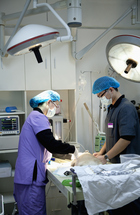 A splenectomy is the surgical removal of the spleen, often performed to treat tumors, infection or trauma. In cats and dogs the spleen may be surgically removed to treat tumors of the spleen, or because the spleen has been damaged due to injury. In some cases, a splenectomy may be performed because of splenic torsion, which involves the twisting of the blood vessels that carry blood to the spleen.
When diagnosing an animal with a spleen related disorder, the doctor will examine the animal and review all symptoms. If the doctor considers removing the spleen as a treatment option, prior to the surgery, he or she may perform several tests to ensure that a splenectomy is necessary. These tests may include:
- Blood tests
- Urine tests
- X-rays
- Biopsy
- Abdominocentesis
A splenectomy is performed under general anesthesia and usually takes about an hour to perform. A small incision is made in the animal's abdominal cavity and the entire spleen is removed. Stitches are used to suture the wound. The animal usually remains under medical care for at least 24 hours after the surgery. If the splenectomy is performed because of malignant tumors, the animal may need additional treatment in the form of chemotherapy or radiation.
Once it is home, the animal must not be allowed to lick, scratch or disturb the incision area. Any disruption may lead to infection or the need for re-suturing. To avoid irritating the area, many pets will be fitted with a cone shaped plastic collar, so they do not bite or scratch at the wound. After surgery, activity should be restricted for one to two weeks.
Most pets recover well after a splenectomy and can function normally after the spleen is removed.