
Laryngeal Disease in Dogs and Cats
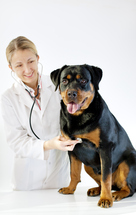 The larynx, or voice box, has the same function in dogs and cats as in humans: assisting in respiration, swallowing and vocalization. In dogs and cats, the larynx facilitates barking and growling or purring and meowing, not to mention whining, howling and all other sounds made by these animals The larynx also functions to protect the animals' breathing apparatus from aspiration. Laryngeal disease is any disorder that interferes with normal functioning of the larynx.
Causes of Laryngeal Disease
While laryngeal disease may be congenital or acquired, most cases are considered idiopathic. Underlying causes may remain unknown, but laryngeal disease usually stems from one of the following:
- Paralysis
- Abnormality of the vagus nerve
- Lung infections or respiratory inflammation
- Neuromuscular disorders
- Hormonal deficiencies
- Traumatic injury
- Cancer
In addition to acute or chronic diseases of the respiratory tract, laryngeal disease may be precipitated by a fluid build-up between the lungs and the chest wall, known as a pleural effusion.
Inherited Laryngeal Disease
Certain breeds of dogs are genetically predisposed to an inherited disorder known as paralysis of the larynx. Laryngeal paralysis is three times more likely to occur in male dogs than in females. This defect has been proven to be genetically transmitted in the breed known as Bouvier des Flandres but also occurs with above average frequency in the following breeds:
- Siberian huskies
- Bull terriers
- Dalmatians
- Rottweilers
- German shepherds
- St. Bernards and Newfoundlands
- Labrador and golden retrievers
- Irish setters
Even though no genetic link has been proven in these breeds, it is strongly suspected that one exists. In cats, no breeds have as yet been singled out as prone to laryngeal disorders, but these problems most commonly appear in older cats or younger cats who have recently undergone trauma or surgical procedures.
Also, dogs and cats that have shortened snouts are prone to brachycephalic airway syndrome, a related condition. This category includes English bulldogs and pugs and Himalayan and Persian cats.
Symptoms of Laryngeal Disease
Laryngeal paralysis may occur in puppies and young dogs of the above-mentioned breeds, but it may also be an acquired trait, appearing most commonly during or after exposure to extreme heat, or exertion or stress. Symptoms of laryngeal disease are evident because of the restriction of airflow through the larynx. These symptoms include:
- Panting at rest
- Noisy respiration
- Stridor (high-pitched sound when inhaling)
- Hoarse vocalization
- Occasional coughing
- Choking while eating
- Intolerance for exercise
- Elevated temperature
The longer laryngeal problems persist, the more uncomfortable the animal becomes, eventually appearing anxious and wanting to forego all activities.
Diagnosis of Laryngeal Disease
 In order to properly diagnose laryngeal disease, the doctor will take a full medical history, perform a physical examination and order one or more of the following diagnostic tests:
- Complete blood profile
- Urinalysis
- Chest X-rays
- Fluoroscopy
- Bronchoscopy
- Ultrasound or CT scan
- Laryngoscopy
The veterinarian will be looking for evidence of thyroid disease, particularly in older animals, brachycephalic airway syndrome in animals with this anatomical structure, and lesions or tumors. For diagnostic imaging tests, the animal will have to be heavily sedated or anesthetized. When there is evidence of laryngeal disease, the doctor will take special care to diagnose or prevent aspiration pneumonia, a life-threatening complication during which food is inhaled into the lungs.
Treatment of Laryngeal Disease
Mild cases of laryngeal disease may be treated at home with antibiotics, anti-inflammatory drugs, and bronchodilators. Pets with this disorder should be kept out of hot environments and restricted from strenuous exercise. Pets with laryngeal disease should not wear collars.
When the laryngeal disease is the result of a congenital abnormality or a tumor, surgical correction is almost always be necessary. Surgery for anatomical problems, even when there has been laryngeal paralysis, typically lengthen lifespan and enhance the animal's quality of life. The prognosis after surgical removal of malignant tumors, however, even when followed by radiation therapy, is not nearly as good.
At times, when the laryngeal disease has progressed to the point where surgical intervention becomes urgent, the pet will require supportive care before the operation, possibly including oxygen therapy, sedation or steroids. At times, a temporary tracheotomy may also be necessary. When a surgical procedure is performed to open the animal's airways, the operation is usually a minimally invasive one. Most owners report that dogs and cats who have such operations recover rapidly, are able to breathe more easily and engage in normal exercise once they recover from the procedure itself.