
Foreign-Object Blockage
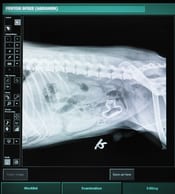 It is not uncommon for dogs and cats to swallow foreign objects. Usually, whatever has been ingested is vomited up or simply passed through the digestive system without causing a problem. Sometimes, however, an object becomes lodged in the animal's gastrointestinal tract, causing pain and discomfort, and preventing food and water from reaching the stomach.
Signs of Foreign-Object Blockage
An animal that has a foreign object lodged in its system may exhibit the following:
- Drooling
- Vomiting
- Foaming at the mouth
- Refusal to eat
- Pawing at the face
- Depression
- Fever
- Distended/painful abdomen
If these symptoms are present, the animal needs immediate veterinary care. Never try to make the animal to vomit.
Confirming Foreign-Object Blockage
The veterinarian will give the animal a clinical examination. Feeling the abdomen may be sufficient to determine if there is a blockage. Otherwise, to confirm or determine the presence of a blockage, the following tests may be performed:
- X-rays
- X-rays, using contrast agent
- Ultrasound
In rare cases, exploratory surgery may be necessary.
Removal of Foreign Objects
Depending on where it has lodged, a foreign object can be removed through endoscopy or traditional surgery. If the object is in the esophagus or stomach, it is possible it can be removed using an endoscope. A long, lighted fiber-optic tube, in this case inserted through the mouth and into the esophagus or stomach, the endoscope has an attachment that removes the object without any incisions being necessary.
If the object is lodged in the intestine, surgery is performed to remove it; afterward, the animal is hospitalized for continued monitoring.
Preventing Foreign-Object Blockage
Although monitoring an animal is the best way to prevent it from eating things it should not, 24-hour surveillance is impossible. The best preventive measures include keeping small swallowable items away from the animal, and providing it only with chews or toys of appropriate size. Chews and toys should be checked periodically for imminent breakage into small pieces.