
Periodontal Disease in Dogs and Cats
 Periodontal disease is an inflammation of the tissues that support and anchor the teeth. Although this disorder can affect dogs and cats of any age, it is more prevalent in older animals. It typically results from improperly cleaned teeth. If not properly treated, periodontal disease can result in degeneration of gums, underlying bone and dental roots and cause serious infection. The best way to prevent this problem is to maintain a program of good oral hygiene for the pet and to make sure the animal has regular dental examinations and cleanings by the veterinarian.
Causes of Periodontal Disease
Once particles of food accumulate at the gum line, they combine with bacteria to form plaque. Over time, plaque hardens into tartar, also known as calculus. This results in an inflammation called gingivitis, an early sign of periodontal disease, evidenced by a reddening of the gums at the tooth line.
Left untreated, as calculus builds up, it causes the teeth to separate from the gum. With more room available at the gum line, bacteria proliferate and periodontal disease worsens. This leads to bone loss, tissue destruction and pockets filled with pus between the teeth and gums.
Risk Factors for Periodontal Disease
In addition to poor or absent dental care, other factors put individual animals at risk for the problem. Dogs are more prone to periodontal disease than cats. miniature and toy breeds particularly. Brachycephalic animals of both species are at higher risk of developing the disorder as are animals who have suffered malnutrition or have underlying disease conditions.
Symptoms of Periodontal Disease
Early symptoms of periodontal disease in dogs and cats may include:
- Halitosis (bad breath)
- Drooling in dogs
- Difficulty chewing
- Pawing at the mouth
- Red, inflamed, bleeding gums
- Tooth loss
- Loss of appetite
- Depression due to pain
Periodontal disease is categorized into four stages of increasing severity. By the time the animal's disease has reached stage 4, the gum recession is so severe that the roots of the teeth may be exposed.
Diagnosis of Periodontal Disease
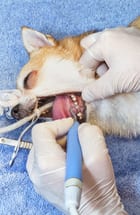 Periodontal disease is diagnosed by dental examination and X-rays. In both cases, care is taken to measure the distance between the affected tooth and the gum. X-rays are important because much as of the problem may not be visible during routine dental examination.
The standards for diagnosis vary somewhat between dogs and cats. In cats, a distance of more than one millimeter between gum and tooth is considered abnormal, whereas in dogs a distance of two millimeters in necessary for a diagnosis of periodontal disease.
Treatment of Periodontal Disease
Treatment of periodontal disease depends on the severity of the condition. During stage 1, the focus is on keeping the animal's teeth and gums clean and as free of bacteria as possible. This involves daily brushing, professional dental cleaning and polishing and application of fluoride to the animal's teeth. During stages 2 and 3, a special veterinary dental cleansing of the spaces between the teeth and games is required, as well as an administration of antibiotic gel.
In the more advanced stages, bone replacement procedures, periodontal splinting, and guided tissue regeneration may become necessary. Once a dog or cat is diagnosed with periodontal disease, more frequent veterinary dental care is required.